Wednesday, 20 March 2019

Isomerism in coordination compound

Isomerism in Coordination Compounds

Two or more different compounds having the same formula are called isomers. Two principal types of isomerism are known among coordination compounds. Each of which can be further subdivided.
1.  Stereoisomerism 
a) Geometrical isomerism
b) Optical isomerism
2. Structural isomerism 
a) Coordination isomerism
b) Ionisation isomerism
c) Hydrate isomerism
d) Linkage isomerism

1. Stereoisomers

Stereoisomers have the same atoms, same sets of bonds, but differ in the relative orientation of these bonds.
Ignoring special cases involving esoteric ligands, then:

Geometric isomers are possible for both square planar and octahedral complexes, but not tetrahedral.
Optical isomers are possible for both tetrahedral and octahedral complexes, but not square planar.
The earliest examples of stereoisomerism involve complexes of Co(III). In 1889, Jorgensen observed purple and green salts of [CoCl2(en)2]+, which Werner later correctly identified as the cis- and trans- geometric isomers. In 1911, the first resolution of optical isomers was reported by Werner  and King for the complexes cis-[CoX(NH3)(en)2]2+, where X=Cl- or Br-.

Geometric Isomers

The number of geometric isomers expected for common stereochemistries are as follows:

Square Planar:

Compound type       No. of isomers
Ma2b2                      2 (cis- and trans-)
Mabcd                     3 (use cis- and trans- relations)
here a, b, c, and d refer to monodentate ligands.
A number of examples of these types have been isolated and characterised and they show very different chemical and biological properties. Thus for example, cis-PtCl2(NH3)2 is an anti-cancer agent (cisplatin) whereas the trans- isomer is inactive against cancer (it is toxic), and so not useful in Chemotherapy.


cis- and trans- isomers of [PtCl2(NH3)2]
cis- and trans- refer to the position of 2 groups relative to each other. In the cis-isomer they are "next to each other" i.e. at 90 degrees in relation to the central metal ion, whereas in the trans- isomer they are "opposite each other", i.e. at 180 degrees relative to the central metal ion.

The first report of the three geometric isomers being isolated and characterised for complexes of the type [Mabcd] was by Il'ya Chernyaev in 1928. The example above was reported by Anna Gel'man in 1948.
Question. Does cis-amminebromo-cis-chloropyridineplatinum(II) uniquely identify isomer (ii) above??

Octahedral:

Compound type          No. of isomers
Ma4b2                         2 (cis- and trans-)
Ma3b3                         2 (fac- and mer-)
MAA2b2                     3 (2*cis- and 1 trans-)
here a, and b, represent monodentate ligands and AA is a bidentate ligand.
In the second example, new labels are introduced to reflect the relative positions of the ligands around the octahedral structure. Thus; placing the 3 groups on one face of the octahedral gives rise to the facial isomer and placing the 3 groups around the centre gives rise to the meridional isomer.


fac- and mer- isomers of [RhCl3(pyr)3].

[Mabcdef] is expected to give 15 geometric isomers. In the case of [PtBrClI(NO2)(NH3)(pyr)], several of these were isolated and characterised by Anna Gel'man and reported in 1956. Optical isomers are possible for each of these 15 forms, making a total of 30 isomers.
The cis- isomer of MAA2b2 may also exhibit optical isomerism although we will concentrate largely on optical isomers of the type M(AA)3 (see below).

Optical Isomers

Optical isomers are related as non-superimposable mirror images and differ in the direction with which they rotate plane-polarised light. These isomers are referred to as enantiomers or enantiomorphs of each other and their non-superimposable structures are described as being asymmetric.
Various methods have been used to denote the absolute configuration of optical isomers such as R or S, Λ or Δ or C and A. The IUPAC rules suggest that for general octahedral complexes C/A scheme is convenient to use and that for bis and tris bidentate complexes the absolute configuration be designated Lambda Λ (left-handed) and Delta Δ (right-handed).
Priorities are assigned for mononuclear coordination systems based on the standard sequence rules developed for enantiomeric carbon compounds by Cahn, Ingold and Prelog (CIP rules). These rules use the coordinating atom to arrange the ligands into a priority order such that the highest atomic number gives the highest priority number (smallest CIP number). For example the hypothetical complex [Co Cl Br I NH3 NO2 SCN]2- would assign the I- as 1, Br as 2, Cl as 3, SCN as 4, NO2 as 5 and NH3 as 6.

Here is one isomer where the I and Cl, and Br and NO2 were found to be trans-to each other.
The reference axis for an octahedral centre is that axis containing the ligating atom of CIP priority 1 and the trans ligating atom of lowest possible priority (highest numerical value). The atoms in the coordination plane perpendicular to the reference axis are viewed from the ligand having that highest priority (CIP priority 1) and the clockwise and anticlockwise sequences of priority numbers are compared. The structure is assigned the symbol C or A, according to whether the clockwise (C) or anticlockwise (A) sequence is lower at the first point of difference. In the example shown above this would be C.

The two optical isomers of [Co(en)3]3+have identical chemical properties and just denoting their absolute configuration does NOT give any information regarding the direction in which they rotate plane-polarised light. This can ONLY be determined from measurement and then the isomers are further distinguished by using the prefixes (-) and (+) depending on whether they rotate left or right.


 To add to the confusion, when measured at the sodium D line (589nm), the tris(1,2-diaminoethane)M(III) complexes (M= Rh(III) and Co(III)) with IDENTICAL absolute configuration, rotate plane polarised light inOPPOSITE directions!
The left-handed (Λ)-[Co(en)3]3+ isomer gives a rotation to the right and therefore corresponds to the (+) isomer.
Since the successful resolution of an entirely inorganic ion (containing no C atoms) hexol only a handful of truly inorganic complexes have been isolated as their optical isomers e.g. (NH4)2pt(S5)3.2H2O
For tetrahedral complexes, R and S would be used in a similar method to tetrahedral Carbon species and although it is predicted that tetrahedral complexes with 4 different ligands should be able to give rise to optical isomers, in general they are too labile and can not be isolated.

2. Structural Isomers

There are several types of this isomerism frequently encountered in coordination chemistry and the following represents some of them.
  • a) Coordination isomerism: where compounds containing complex anionic and cationic parts can be thought of as occurring by interchange of some ligands from the cationic part to the anionic part.
one isomer [Co(NH3)6] [Cr(C2O4)3]
another isomer [Co(C2O4)3] [Cr(NH3)6]
  • b) Ionisation isomers: where the isomers can be thought of as occurring because of the formation of different ions in solution.
one isomer [PtBr(NH3)3]NO2 -> NO2- anions in solution
another isomer [Pt(NO2)(NH3)3]Br -> Br- anions in solution
Notice that both anions are necessary to balance the charge of the complex, and that they differ in that one ion is directly attached to the central metal but the other is not. A very similar type of isomerism results from replacement of a coordinated group by a solvent molecule (Solvate Isomerism). In the case of water, this is called Hydrate isomerism.
  • c) Hydrate isomerism: the best known example of this occurs for chromium chloride "CrCl3.6H2O" which may contain 4, 5, or 6 coordinated water molecules.
[CrCl2(H2O)4]Cl.2H2O bright-green
[CrCl(H2O)5]Cl2.H2O grey-green
[Cr(H2O)6]Cl3 violet
These isomers have very different chemical properties and on reaction with AgNO3 to test for Cl- ions, would find 1, 2, and 3 Cl- ions in solution respectively.

These isomers have very different chemical properties and on reaction with AgNO3 to test for Cl- ions, would find 1, 2, and 3 Cl- ions in solution respectively.
  • d) Linkage isomerism  occurs with ambidentate ligands. These ligands are capable of coordinating in more than one way. The best known cases involve the monodentate ligands SCN- / NCS- and NO2- / ONO-.
For example:
[Co(ONO)(NH3)5]Cl the nitrito isomer -O attached
[Co(NO2)(NH3)5]Cl the nitro isomer - N attached.

Inorganic Nomenclature

As part of this course, you are required to make yourselves familiar with the rules related to inorganic naming

Uses of Coordination Compounds

A brief survey of some of the uses of coordination compounds includes:
l. Dyes and Pigments: Coordination compounds have been used from the earliest times as dyes and pigments, for example madder dye which is red, was used by the ancient Greeks and others. It is a complex of Hydroxyanthraquinone. A more modern example is the pigment copper phthalocyanine, which is blue.
2. Analytical Chemistry: You have already encountered many such uses during the laboratory course.
(a) Colour Tests: Since many complexes are highly coloured they can be used as colourimetric reagents e.g. formation of red 2,2'-bipyridyl and l,l0-phenanthroline complexes as a test for Fe(II)

(b) Gravimetric Analysis: Here chelating ligands are often used to form insoluble complexes e.g. Ni(DMG)2 and Al(oxine)3 (see laboratory manual).

(c) Complexometric Titrations and Masking Agents: An example of this is the use of EDTA in the volumetric determination of a wide variety of metal ions in solution, e.g. Zn2+, Pb2+, Ca2+,Co2+, Ni2+, Cu2+, etc. By careful adjustment of the pH and using suitable indicators, mixtures of metals can be analysed, e.g. Bi3+in the presence of Pb2+ (see laboratory manual). Alternatively, EDTA may be used as a masking agent to remove a metal ion which would interfere with the analysis of a second metal ion present.

3. Sequestering Agents: Related to their use as masking agents is the use of ligands for "sequestering" i.e. for the effective removal of objectionable ions from solution in industrial processing, e.g. EDTA is used to "soften" water. The addition of EDTA to water is used in boilers etc., to prevent "scaling" or build up of insoluble calcium salts.
4. Extraction of Metals: Sometimes certain metals can be leached from their ores by formation of stable complexes e.g. Ag and Au as complexes of cyanide ion.
5. Bio-Inorganic Chemistry: Naturally occurring complexes include haemoglobin, chlorophyll, vitamin B12etc.
EDTA and other complexing agents have been used to speed the elimination of harmful radioactive and other toxic elements from the body. (e.g. Pb2+). In these cases soluble metal chelate complexes are formed.
6. Chemo-therapy: an example here is the use of cis- ptCl2(NH3)2 as antitumour drug.

Thursday, 14 March 2019

Plasma as state of matter


A plasma is a hot ionized gas consisting of approximately equal numbers of positively charged ions and negatively charged electrons. The characteristics of plasmas are significantly different from those of ordinary neutral gases so that plasmas are considered a distinct "fourth state of matter." For example, because plasmas are made up of electrically charged particles, they are strongly influenced by electric and magnetic fields (see figure) while neutral gases are not. An example of such influence is the trapping of energetic charged particles along geomagnetic field lines to form the Van Allen radiation belts.


In addition to externally imposed fields, such as the Earth's magnetic field or the interplanetary magnetic field, the plasma is acted upon by electric and magnetic fields created within the plasma itself through localized charge concentrations and electric currents that result from the differential motion of the ions and electrons. The forces exerted by these fields on the charged particles that make up the plasma act over long distances and impart to the particles' behavior a coherent, collective quality that neutral gases do not display. (Despite the existence of localized charge concentrations and electric potentials, a plasma is electrically "quasi-neutral," because, in aggregate, there are approximately equal numbers of positively and negatively charged particles distributed so that their charges cancel.).
The plasma universe

It is estimated that 99% of the matter in the observable universe is in the plasma state...hence the expression "plasma universe." (The phrase "observable universe" is an important qualifier: roughly 90% of the mass of the universe is thought to be contained in "dark matter," the composition and state of which are unknown.) Stars, stellar and extragalactic jets, and the interstellar medium are examples of astrophysical plasmas (see figure). In our solar system, the Sun, the interplanetary medium, the magnetospheres and/or ionospheres of the Earth and other planets, as well as the ionospheres of comets and certain planetary moons all consist of plasmas.
The plasmas of interest to space physicists are extremely tenuous, with densities dramatically lower than those achieved in laboratory vacuums. The density of the best laboratory vacuum is about 10 billion particles per cubic centimeter. In comparison, the density of the densest magnetospheric plasma region, the inner plasmasphere, is only 1000 particles per cubic centimeter, while that of the plasma sheet is less than 1 particle per cubic centimeter.
The temperatures of space plasmas are very high, ranging from several thousand degrees Celsius in the plasmasphere to several million degrees in the ring current. While the temperatures of the "cooler" plasmas of the ionosphere and plasmasphere are typically given in degrees Kelvin, those of the "hotter" magnetospheric plasmas are more commonly expressed in terms of the average kinetic energies of their constitutent particles measured in "electron volts." An electron volt (eV) is the energy that an electron acquires as it is accelerated through a potential difference of one volt and is equivalent to 11,600 degrees Kelvin. Magnetospheric plasmas are often characterized as being "cold" or "hot." Although these labels are quite subjective, they are widely used in the space physics literature. As a rule of thumb, plasmas with temperatures less than about 100 eV are "cold," while those with temperatures ranging from 100 eV to 30 keV can be considered "hot." (Particles with higher energies--such as those that populate the radiation belt--are termed "energetic.")
A Bose-Einstein condensate is a group of atoms cooled to within a hair of absolute zero . When they reach that temperature the atoms are hardly moving relative to each other; they have almost no free energy to do so. At that point, the atoms begin to clump together, and enter the same energy states. They become identical, from a physical point of view, and the whole group starts behaving as though it were a single atom.
To make a Bose-Einstein condensate, you start with a cloud of diffuse gas. Many experiments start with atoms of rubidium. Then you cool it with lasers, using the beams to take energy away from the atoms. After that, to cool them further, scientists use evaporative cooling. "With a [Bose-Einstein condensate], you start from a disordered state, where kinetic energy is greater than potential energy," said Xuedong Hu, a professor of physics at the University at Buffalo. "You cool it down, but it doesn't form a lattice like a solid."
Instead, the atoms fall into the same quantum states, and can't be distinguished from one another. At that point the atoms start obeying what are called Bose-Einstein statistics, which are usually applied to particles you can't tell apart, such as photons.
Theory & discovery
Bose-Einstein condensates were first predicted theoretically by Satyendra Nath Bose (1894-1974), an Indian physicist who also discovered the subatomic particle named for him, the boson. Bose was working on statistical problems in quantum mechanics, and sent his ideas to Albert Einstein. Einstein thought them important enough to get them published. As importantly, Einstein saw that Bose's mathematics — later known as Bose-Einstein statistics — could be applied to atoms as well as light.
What the two found was that ordinarily, atoms have to have certain energies — in fact one of the fundamentals of quantum mechanics is that the energy of an atom or other subatomic particle can't be arbitrary. This is why electrons, for example, have discrete "orbitals" that they have to occupy, and why they give off photons of specific wavelengths when they drop from one orbital, or energy level, to another. But cool the atoms to within billionths of a degree of absolute zero and some atoms begin to fall into the same energy level, becoming indistinguishable.
That's why the atoms in a Bose-Einstein condensate behave like "super atoms." When one tries to measure where they are, instead of seeing discrete atoms one sees more of a fuzzy ball.
Other states of matter all follow the Pauli Exclusion Principle, named for physicist Wolfgang Pauli. Pauli (1900-1958) was an Austrian-born Swiss and American theoretical physicist and one of the pioneers of quantum says that fermions — the kinds of particles that make up matter — can't be in identical quantum states. This is why when two electrons are in the same orbital, their spins have to be opposite so they add up to zero. That in turn is one reason why chemistry works the way it does and one reason atoms can't occupy the same space at the same time. Bose-Einstein condensates break that rule. Though the theory said such states of matter should exist, it wasn't until 1995 that Eric A. Cornell and Carl E. Wieman, both of the Joint Institute for Lab Astrophysics (JILA) in Boulder, Colorado, and Wolfgang Ketterle, of the Massachusetts Institute of Technology, managed to make one, for which they got the 2001 Nobel Prize in Physics.
In July 2018, an experiment aboard the International Space Station cooled a cloud of rubidium atoms to ten-millionth of a degree above absolute zero.

Friday, 1 February 2019

Solid state

Hii everyone today I am going to share you something about solid state chemistry.in this topic I am going to explain some definition and derivations etc.


Crystalline solid : A crystalline solid is homogeneous solid in which the constitunet particles , atom ,ions or molecules are arranged in definite repeating pattern.(DRP)

Isomorphous :  Two or more substance having the same crystal structure are called isomorphous.

Example; NaF and Mgo

Polymorphous : A singel substance that crysatallise in two or more forms uder different condition.

Example ; NaCl and KCl

Anisotropy:  change in physical value when measured in different directions is called anisotropy.

Example ; wood and it's composites

Amorphous solid : do not have well developed order crystalline structure.

Example ; Tar ,glass, plastic ,rubber .

     Classification of crystalline solid


Unit cell :  smallest repeating structural unit .

Lattice point : any point at intersection of line is lattice point .

Sapce lattice ; collection of all the points in the crystal having the same environment is called sapce lattice.

Note ; lattice point can be arranged in maximum fourteen type .the arrangements is called Bravais lattice

Coordination number ; constituent particles of the crystal lattice is the number of particles surrounded a single particle in the crystal lattice.


    Seven type of crystalline lattice


Fourteen types of Bravais lattice 


               Packing in solid

1) close packing in one dimensions : in one dimensions the Coordination number is 2.


2) close packing in two dimensions; in two dimensions there is two type of arrangement are possible
AAAA type and ABABAB type

In AAAA type structure are generated is Square close packing and coordination number is 4 .


In ABABAB types structure are generated is hexagonal close packing and coordination number is 6.

3) close packing in three dimensions ; in three dimensions there is three type of arrangement are possible

l) AAAA type in 3-D ; there is formation of cubic structure and coordination number is 6 .


ll) ABABAB types in 3-D ; there is formation of hexagonal close packed (HCP) structure in which the Coordination number is 12.

lll) ABCABC types in 3-D : there is formation of  cubic close packed (CCP) structure and coordination number is 12.


                 Density of unit cell 


Important formulae 


Deffects in solid


Electrical properties of solid 


Magnetic properties of solid 


Wednesday, 30 January 2019

Chemical reaction in our daily life

Hii everyone, I am sharing some idea about chemical reaction in our body and its very important know which type of reaction going inside  our body.

In daily Life there's is so many reaction takes place in day to day Life some examples
Some of the observable examples of chemical reactions in everyday life are respiration (aerobic and anaerobic), photosynthesis, rusting and burning.
Look at the things around you, nearly all of them are made up of some sort of substances, which are further classified into element, mixture, alloy, etc. And speaking in chemistry terms, the air we breathe is a mixture in gaseous state, while water is a compound existing in liquid state. Considering the abundance of substances in and around us, it is not unusual to observe examples of chemical reactions in everyday life. Before we discuss the chemical reactions that occur in everyday, let's try to understand what actually takes place a chemical reaction.
What are Chemical Reactions?
A chemical reaction is defined as the process, wherein a set of chemical substances react with each other, which leads to their conversion into other different forms. The initial substances used the reaction are collectively called reactants, while the final substances formed after the reaction are known a products. In general, the chemical properties of the reactants and products are different from each other. Based on whether the reaction is initiated with energy or without energy, it is classified into two types, spontaneous reaction (that occurs on its own) and non-spontaneous reaction (require energy for activation).
Some Chemical Reactions in Everyday Life
Science being a subject of common interest, it is very intriguing to analyze visual experiments happening in day-to-day life. There are a plethora of products that you use everyday, which are formulated with application of chemical reaction. Say for example; toothpaste, soap, shampoo, cleaning agent, etc. are all results of chemical reactions. Following are some of the most profound chemical reactions, which we encounter in everyday life :
Aerobic Respiration
Do you know indulging in physical movements is associated with a chemical reaction? The process requires energy, which is yielded by aerobic respiration. Over here, respiration helps breaks down glucose (an energy source) into water, carbon dioxide and energy in form of ATP (adenosine triphosphate). The balanced cellular respiration equation is represented as:
C6H12O6 + 6O2 → 6CO2+ 6H2O + Energy (36 ATPs)
Anaerobic Respiration
Due to overexercising, sometimes our body cells run out of oxygen and respire anaerobically. This cause synthesis of lactic acid and cause muscle cramps. Anaerobic respiration is observed in some bacteria, yeast and other organisms. In contrary to the aerobic type, it breaks down glucose in the absence of oxygen, resulting in production of ethanol, carbon dioxide and energy. Anaerobic respiration equation is:
C6H12O6→ 2C2H5OH + 2CO2 + Energy
Photosynthesis
Photosynthesis is the process by which green plants manufacture their own food. This occurs in presence of sunlight and other raw materials, namely carbon dioxide and water. The chlorophyll pigment harvests the light energy from sunlight, which is then converted into glucose by the phenomenon of photosynthesis. In short, it is the opposite of aerobic respiration. The equation for photosynthesis is:
6 CO2+ 6 H2O + Light energy → C6H12O6+ 6 O2
Rusting of Iron
Very often, you notice a coating of rust over unpainted iron surfaces, which gradually leads to disintegration of iron. This is nothing, but a chemical phenomenon called rusting. In this case, iron (a very reactive metal) combines with oxygen in presence of water (more precisely, atmospheric moisture), resulting in formation of iron oxides. The chemical reaction behind rusting can be simply represented as:
Fe + O2 + H2O → Fe2O3. XH2O
Propane Grill
Have you ever prepared meat in a propane grill? The meat placed over the burner is cooked with the help of heat energy released after burning of propane gas. Thus, propane is the reactant which when burnt with the help of oxygen gives heat energy and other byproducts. Check out the balanced equation for the combustion reaction that take place in a propane grill:
C3H8 + 5O2→ 4H2O + 3CO2+ energy
Whether you consider cooking, souring, fermenting or burning, there is a chemical reaction accompanying these everyday processes. Thus, it won't be wrong to say learning chemistry and chemical reactions start at home.

Adsorption Isotherm

Hello everyone today I am going to tell you something about adsorption Isotherm.

The process of Adsorption is usually studied through graphs know as adsorption isotherm. It is the graph between the amounts of adsorbate .

What is Adsorption Isotherm?


The process of Adsorption is usually studied through graphs know as adsorption isotherm. It is the graph between the amounts of adsorbate (x) adsorbed on the surface of adsorbent (m) and pressure at constant temperature. Different adsorption isotherms have been Freundlich, Langmuir and BET theory.

Basic Adsorption Isotherm


In the process of adsorption, adsorbate gets adsorbed on adsorbent.
Adsorption
According to Le-Chatelier principle, the direction of equilibrium would shift in that direction where the stress can be relieved. In case of application of excess of pressure to the equilibrium system, the equilibrium will shift in the direction where the number of molecules decreases. Since number of molecules decreases in forward direction, with the increases in pressure, forward direction of equilibrium will be favored.
Basic Adsorption Isotherm
From the graph, we can predict that after saturation pressure Ps, adsorption does not occur anymore. This can be explained by the fact that there are limited numbers of vacancies on the surface of the adsorbent. At high pressure a stage is reached when all the sites are occupied and further increase in pressure does not cause any difference in adsorption process. At high pressure, Adsorption is independent of pressure.

Freundlich Adsorption Isotherm


In 1909, Freundlich gave an empirical expression representing the isothermal variation of adsorption of a quantity of gas adsorbed by unit mass of solid adsorbent with pressure. This equation is known as Freundlich Adsorption Isotherm or Freundlich Adsorption equation or simply Freundlich Isotherm.
Freundlich Adsorption equation
Where x is the mass of the gas adsorbed on mass m of the adsorbent at pressure p and k, n are constants whose values depend upon adsorbent and gas at particular temperature. Though Freundlich Isotherm correctly established the relationship of adsorption with pressure at lower values, it failed to predict value of adsorption at higher pressure.

Langmuir Adsorption Isotherm


In 1916 Langmuir proposed another Adsorption Isotherm known as Langmuir Adsorption isotherm. This isotherm was based on different assumptions one of which is that dynamic equilibrium exists between adsorbed gaseous molecules and the free gaseous molecules.
Equation
Where A(g) is unadsorbed gaseous molecule, B(s) is unoccupied metal surface and AB is Adsorbed gaseous molecule.
Based on his theory, he derived Langmuir Equation which depicted a relationship between the number of active sites of the surface undergoing adsorption and pressure.
Langmuir Equation
Where θ the number of sites of the surface which are covered with gaseous molecule, P represents pressure and K is the equilibrium constant for distribution of adsorbate between the surface and the gas phase .The basic limitation of Langmuir adsorption equation is that it is valid at low pressure only.
At lower pressure, KP is so small, that factor (1+KP) in denominator can almost be ignored. So Langmuir equation reduces to
θ = KP
At high pressure KP is so large, that factor (1+KP) in denominator is nearly equal to KP. So Langmuir equation reduces to
Reduced Langmuir equation

BET adsorption Isotherm

BET Theory put forward by Brunauer, Emmett and Teller explained that multilayer formation is the true picture of physical Adsorption.
One of the basic assumptions of Langmuir Adsorption Isotherm was that adsorption is monolayer in nature. Langmuir adsorption equation is applicable under the conditions of low pressure. Under these conditions, gaseous molecules would possess high thermal energy and high escape velocity. As a result of this less number of gaseous molecules would be available near the surface of adsorbent.
Under the condition of high pressure and low temperature, thermal energy of gaseous molecules decreases and more and more gaseous molecules would be available per unit surface area. Due to this multilayer adsorption would occur. The multilayer formation was explained by BET Theory. The BET equation is given as
BET equation
The another form of BET equation is
Another form of BET equation
Where Vmono be the adsorbed volume of gas at high pressure conditions so as to cover the surface with a unilayer of gaseous molecules,
Ratio
the ratio is designated C. K1 is the equilibrium constant when single molecule adsorbed per vacant site and KL is the equilibrium constant to the saturated vapor liquid equilibrium.

Type of Adsorption Isotherm

Five different types of adsorption isotherm and their characteristics are explained below.

Type I Adsorption Isotherm

Type I Adsorption Isotherm
  • The above graph depicts Monolayer adsorption.
  • This graph can be easily explained using Langmuir Adsorption Isotherm.
  • If BET equation, when P/P0<<1 and c>>1, then it leads to monolayer formation and Type I Adsorption Isotherm is obtained.
  • Examples of Type-I adsorption are Adsorption of Nitrogen (N2) or Hydrogen (H) on charcoal at temperature near to -1800C.

Type II Adsorption Isotherm

Type II Adsorption Isotherm
  • Type II Adsorption Isotherm shows large deviation from Langmuir model of adsorption.
  • The intermediate flat region in the isotherm corresponds to monolayer formation.
  • In BET equation, value of C has to be very large in comparison to 1.
  • Type II
  • Examples of Type-II adsorption are Nitrogen (N2 (g)) adsorbed at -1950C on Iron (Fe) catalyst and Nitrogen (N2 (g)) adsorbed at -1950C on silica gel.

Type III Adsorption Isotherm

Type III Adsorption Isotherm
  • Type III Adsorption Isotherm also shows large deviation from Langmuir model.
  • In BET equation value if C <<< 1 Type III Adsorption Isotherm obtained.
  • This isotherm explains the formation of multilayer.
  • There is no flattish portion in the curve which indicates that monolayer formation is missing.
  • Examples of Type III Adsorption Isotherm are Bromine (Br2) at 790C on silica gel or Iodine (I2) at 790C on silica gel.

Type IV Adsorption Isotherm

Type IV Adsorption Isotherm
  • At lower pressure region of graph is quite similar to Type II. This explains formation of monolayer followed by multilayer.
  • The saturation level reaches at a pressure below the saturation vapor pressure .This can be explained on the basis of a possibility of gases getting condensed in the tiny capillary pores of adsorbent at pressure below the saturation pressure (PS) of the gas.
  • Examples of Type IV Adsorption Isotherm are of adsorption of Benzene on Iron Oxide (Fe2O3) at 500C and adsorption of Benzene on silica gel at 500C.

Type V Adsorption Isotherm

Type V Adsorption Isotherm
  • Explanation of Type V graph is similar to Type IV.
  • Example of Type V Adsorption Isotherm is adsorption of Water (vapors) at 1000C on charcoal.
  • Type IV and V shows phenomenon of capillary condensation of gas.

Thursday, 24 January 2019

TYPES OF HYBRIDIZATION

Hi everyone today i am going to tell you some idea about hybridization in which i am going tell you types of hybridization.

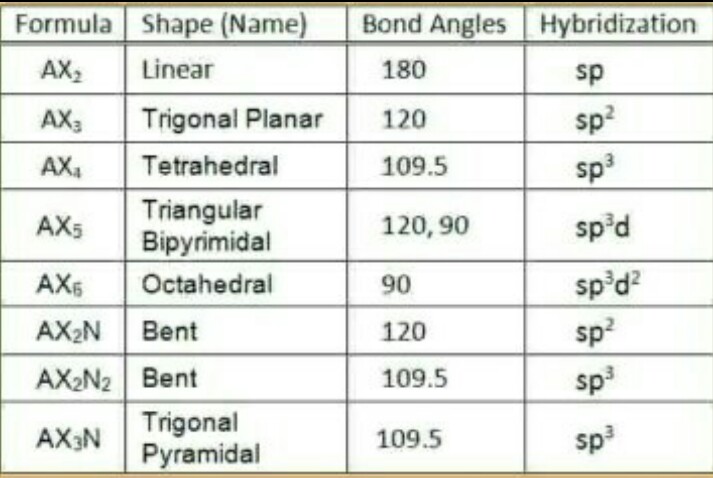
Following are the types of hybridisation:

1) sp – Hybridisation
In such hybridisation one s- and one p-orbital are mixed to form two sp – hybrid orbitals, having a linear structure with bond angle 180 degrees. For example in the formation of BeCl2
, first be atom comes in excited state 2s1 2p1, then hybridized to form two sp – hybrid orbitals. These hybrid orbitals overlap with the two p-orbitals of two chlorine atoms to form BeCl2
2) sp2 – Hybridisation
In such hybridisation one s- and tow p-orbitals are mixed form three sp2– hybrid orbitals, having a planar triangular structure with bond angle 120 degrees.
3) sp3 – Hybridisation
In such hybridisation one s- and three p-orbitals are mixed to form four sp3– hybrid orbitals having a tetrahedral structure with bond angle 109 degrees 28′, that is, 109.5 degrees. 


Also if  you want some tricks how to find hybridization in very short time follow my youtYou channel CHEM SM and also you visit on following links


https://youtu.be/zIh2UPcCMzI

Thanks everyone's.


Libermann's nitroso reaction

 nitroso reaction While phenol is reacted with NaNO2 and concentrated H2SO4, it provides a deep green or blue colour which changes to red on...